
California and Montana have updated car seat laws.
Here are the 2025 updated car seat laws. And a list of bills that did not make it to law as far as I can find. Please let me know if I missed a car seat law updated in 2025.
Remember the state car seat laws are generally the minimum standard for car seat use. For safer travels with your little one, familiarize yourself with best practice recommendations and perhaps visit with a local child passenger safety technician to discuss your specific needs.
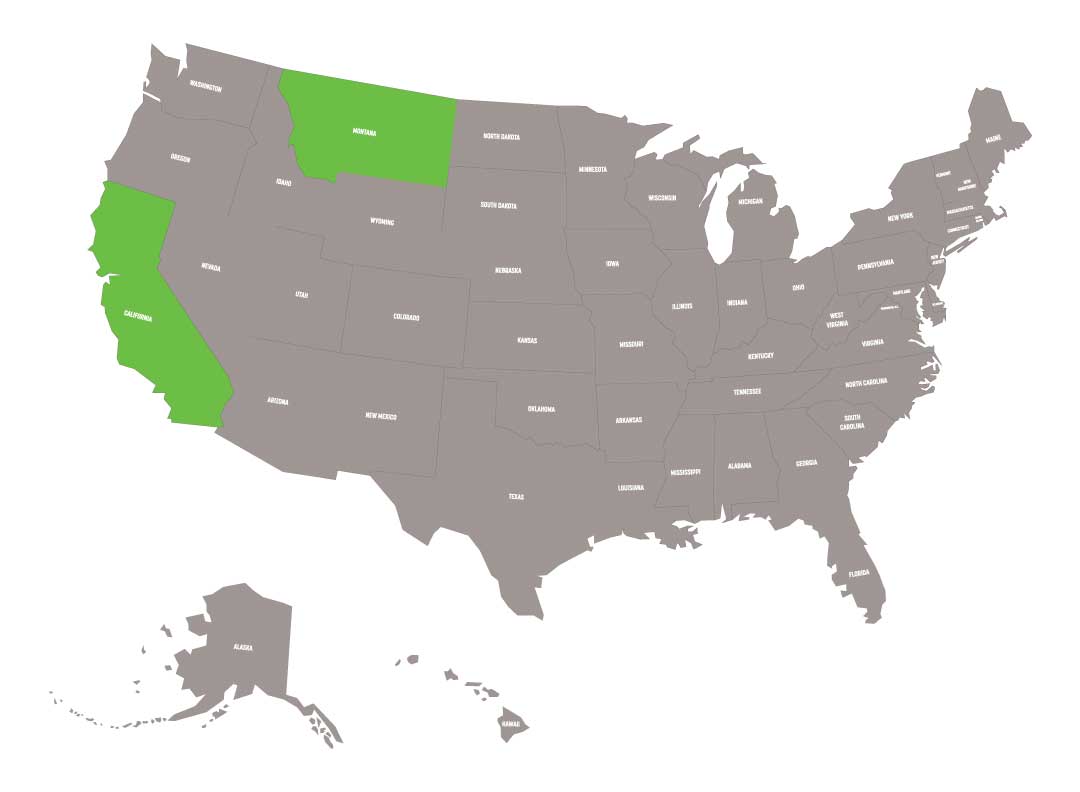
California car seat law
California changed the booster seat requirements to encourage children and their parents to stay in booster seats until they’ve grown tall enough for a seat belt to fit them properly.
The original version of the bill would have required all children younger than 10 to use booster seats — up to age 13 if they couldn’t pass the 5-step seat belt fit test and banned all those under 13 from sitting in the front seat — up to age 16 if they couldn’t pass the 5-step seat belt fit test.
This updated car seat law goes into effect January 1, 2027.
What it was: Children under the age of 8 must be secured in the back seat of the vehicle in an appropriate child passenger restraint system meeting applicable federal motor vehicle safety standards.
- If the child is less than two years of age the child shall be properly restrained in a rear-facing child restraint system in a rear seat of the vehicle, unless the child is more than 40 pounds or 40 inches. (Effective Jan. 1, 2017)
- Children who weigh 40 or more pounds or are 40 or more inches tall shall be secured in a manner that complies with the height and weight limits specified by the manufacturer of the child passenger restraint system.
- Children under the age of 8 who are 4′ 9″ or taller may be secured by a safety belt in the back seat.
- Children who are 8 years and over shall be properly secured in an appropriate child passenger restraint system or safety belt.
What it is now: Children under the age of 8 must be secured in the back seat of the vehicle in an appropriate child passenger restraint system meeting applicable federal motor vehicle safety standards.
- If the child is less than two years of age the child shall be properly restrained in a rear-facing child restraint system in a rear seat of the vehicle, unless the child is more than 40 pounds or 40 inches. (Effective Jan. 1, 2017)
- Children who weigh 40 or more pounds or are 40 or more inches tall shall be secured in a manner that complies with the height and weight limits specified by the manufacturer of the child passenger restraint system.
- Children under the age of 8 who are 4′ 9″ or taller may be secured by a safety belt in the back seat.
- Children who are 8 years but less than 16 shall be properly secured in an appropriate child passenger restraint system unless child can be properly restrained by the seat belt and properly restrained is defined as passing the 5-step seat belt fit test as follows:
- (1) The child or ward is sitting all the way back against the auto seat.
- (2) The knees of the child or ward bend over the edge of the auto seat.
- (3) The shoulder belt snugly crosses the center of the child’s chest and shoulder, not the child’s neck.
- (4) The lap belt is as low as possible and is touching the child or ward’s thighs.
- (5) The child or ward can stay seated like this for the whole trip.
California child passenger safety laws are a primary violation. This means a driver can be pulled over if the officer reasonably suspects a violation.
Montana car seat law
Montana updated their car seat law to be more in line with federal standards. The new law better defines what type of device is needed for each age.
This updated car seat law went into effect October 1, 2025.
What it was: Children less than six years of age who weigh less than 60 pounds must be restrained with a child safety restraint appropriate for the child’s weight and height as indicated by manufacturer standards.
What it is now: Children under the age of 9 must be properly secured child safety restraint system meeting applicable federal motor vehicle safety standards.
- A child under 2 years must be properly restrained in a rear-facing child safety seat that complies with federal safety standards.
- Children aged 2 to 4 must be in a rear-facing or forward-facing child safety seat with an internal harness.
- Children aged 4 to 8 need to be in a forward-facing child safety seat or a booster seat.
- If the child is 9 or older, or the child has outgrown the height and weight limits of a booster, they must be secured with a standard seat belt.
Download our report: Common Car Seat Mistakes and How to Fix Them
Related laws or proposed bills
Alabama: House Bill 18 would have changed the law to require 2-year-old children who are 35 pounds and lighter to be in rear-facing car seats, which is an increase from 20 pounds. The bill failed on the House floor on Feb. 27, 2025
Meanwhile, in Colorado, a newly-passed house bill will require car insurance companies to include the replacement cost of a car seat or other restraint system in the vehicle at the time of a crash, according to the Scripps News Group station in Denver.
Colorado: As part of HB25-1179, car insurance companies must include the replacement cost of a car seat or other restraint system in the vehicle at the time of a crash.
Connecticut: Senate Bill 1146 seems to have stalled after public hearing in Februrary 2025. The bill was to require a child (1) under three years of age to ride rear-facing in a child restraint system in a motor vehicle, and (2) be secured in a child restraint system or booster seat in a manner that complies with the height and weight limits specified by the manufacturer of such system or seat and the motor vehicle manufacturer’s instructions.
North Carolina: House Bill 368 was sent to Senate committee in April and stalled. The bill was to require newborns to have to be secured in a rear-facing seat in the backseat and change the booster seat requirements to height instead of weight.
South Carolina: Children under the age of 12 must be buckled in golf carts being operated on the public streets and highways of South Carolina.
Virginia: Seat belt law updated to include all occupants instead of front seat passengers and child back seat passengers. Law went into effect 7/1/25.
Previously car seat laws updated to extend time rear facing
- in 2015
- New Jersey
- Oklahoma
- in 2016
- California
- Pennsylvania
- in 2017
- Connecticut
- New York
- Oregon
- Rhode Island
- South Carolina
- in 2018
- Illinois
- Nebraska
- Virginia
- in 2019
- Louisiana
- Maine
- Washington
- in 2021
- Nevada
- in 2022-2023
- Delaware
- Hawaii
- Maryland
- New Hampshire
- in 2024
- Colorado
- Michigan
- Minnesota
- Vermont
American Academy of Pediatrics increased the national standard to at least age 2 back in 2011. And states have gradually been increasing the rear-facing age requirement to up to 2 years old. However, more recently the American Academy of Pediatrics increased the standard again. Now they recommend what car seat experts have been expressing for years. That is to keep the car seat rear-facing for as long as possible. Keep the child in a seat until the child reaches the maximum height or weight allowed. Some children can remain rear facing in some seats until up through age 3 or even older.
You can see the remainder of the car seat laws by state here.
By Amie Durocher, Creative Director at Safe Ride 4 Kids and certified CPS Tech since 2004
Copyright 2026 Safe Ride 4 Kids. All rights reserved. You may not publish, broadcast, rewrite or redistribute this material without permission. You are welcome to link to Safe Ride 4 Kids or share on social media.


